
Frequently asked
Questions
Have questions about visiting EARS or supporting our mission? Here are answers to some of the most frequently asked questions.
If the questions aren’t answered below, email us at earsanctuary@gmail.com
Why did you start an exotic wildlife sanctuary?
To be honest we were asked by people getting out of the business for one reason or another to take their animals and give them a forever loving home. Others came from exploited, neglected and abused private and profit driven operations.
Where do your animals come from?
Our residents come from a variety of backgrounds: failed roadside zoos, illegal private ownership, voluntary surrenders, or seizure by authorities. Some were surrendered when they became too expensive to feed or too dangerous to manage. Others were abandoned once they aged out of being profitable.
Do you take in all animals you're asked to rescue?
Unfortunately, we cannot. Our resources and space are limited. We never accept an animal we cannot properly care for, but we do collaborate with other sanctuaries when possible.
What happens when a sanctuaries close?
It’s a growing crisis. As sanctuaries shut down due to economic strain or overcrowding, the animals left behind are at extreme risk — including euthanasia. That’s why EARS fights to stay sustainable and advocates for stronger protections for captive wildlife.
When can I visit EARS?
We are open to the public only on the first Saturday of every month at 10 a.m. BOOK A TOUR HERE
Private tours are available by advance reservation. call ahead to schedule at (352) 266-2859
Are walk-ins allowed for private tours?
No. Private tours are by appointment only to ensure animal safety and provide a focused educational experience. Call to book with us or for any further information at (352) 266-2859
Why do we have to stay in a group & keep back 4 feet from the animal enclosures when taking our tour?
For your safety and the safety of our animals. Florida law requires that visitors maintain a safe distance from all enclosures. Florida is a No Contact state, and the Florida Fish and Wildlife Conservation Commission (FWC) requires that all guests remain at least 4 feet back and never touch the animals.
While our residents may look calm or even cuddly, they are still wild animals with incredible strength, speed, and instincts. Accidents can happen in an instant, even with experienced handlers nearby. Our top priority is to keep both people and animals safe at all times.
It’s also important to understand that if a visitor ignores safety rules and an injury occurs, the animal involved could face serious consequences under state law. We work very hard to protect these animals, and following the safety guidelines helps ensure their well-being as well as your own.
For these reasons, we strictly enforce the 4-foot rule and require all visitors to stay with their group during tours. Guests who do not follow safety instructions may be asked to leave the premises.
Our trained staff and volunteers take their responsibility as animal protectors seriously and your cooperation helps us continue providing a safe and respectful environment for everyone.
Can we take videos & pictures of the animals while on our tour?
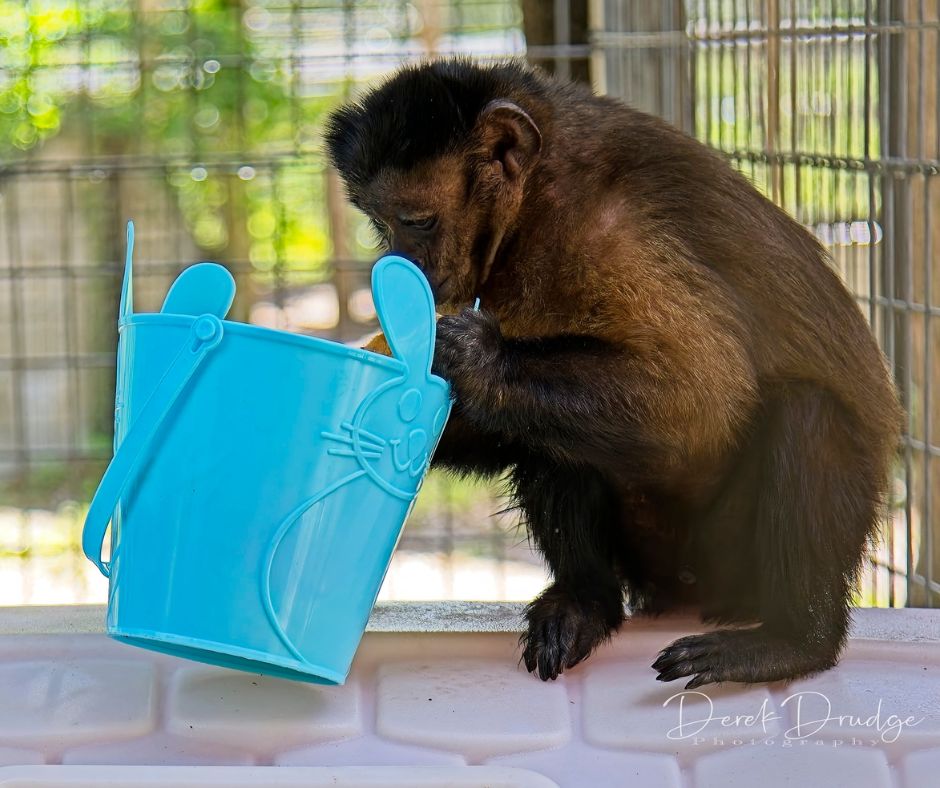
We do not allow any photography or video. We have photos available for purchase.
Why can’t the animals be released into the wild instead of living in enclosures?
This is a question we hear often. Unfortunately, releasing these animals into the wild is rarely possible or safe. Many of the animals at EARS were born in captivity and have never learned how to hunt, find shelter, or survive on their own. Releasing them into unfamiliar environments—whether locally or in another country would likely lead to injury, starvation, or death. In some parts of the world, animals are also at risk of being hunted or killed for their body parts.
While we wish every animal could live freely in the wild, the reality is that captivity caused by human activity makes true release unrealistic for most rescued animals.
As for their living spaces, our enclosures are large and exceed minimum state requirements. In addition to their habitats, EARS provides some of the largest turnout areas in the state of Florida. Our animals rotate through these spaces so they can run, play, explore, and feel the earth beneath their paws.
Visitors often comment on how relaxed and content our animals appear. We work hard every day to provide an environment where they feel comfortable, healthy, enriched, and cared for. Like our founder, Gail, often says, these animals are not here because they did anything wrong, they are here because they deserve safety, dignity, and lifelong care.
While we share the wish that they could live freely, our responsibility is to give them the best possible life in a safe and protected environment.
Can children attend tours?
Yes. Children are welcome, but we recommend tours for ages 6 and up to ensure engagement with the educational content and respect for the animals.
How do I support EARS if I can't visit?
You can donate, become an animal sponsor, follow us on social media, or share our mission with friends and family. Every effort helps our residents live fuller, happier lives.
TAP HERE For more information
Are donations tax-deductible?
Yes. EARS is a registered 501(c)(3) nonprofit and your donations are fully tax-deductible as allowed by law.