
Suzie
Meet Suzie, over 40 years old, black-capped capuchin monkey at EARS Sanctuary, and learn how her intelligence and curiosity thrive in a safe, enriched environment.
In the wild, black-capped capuchin monkeys live in the tropical forests of South America, including regions of Brazil, Colombia, Venezuela, and Peru. They spend most of their time in trees, skillfully climbing and leaping from branch to branch using their strong limbs and excellent balance.
Capuchins are highly social animals that live in groups called troops. They communicate through sounds, facial expressions, and body language, forming strong social bonds with other members of their group. Their intelligence and curiosity make them one of the most interactive and engaging primates to observe.
Unfortunately, capuchin monkeys are sometimes kept as pets or used in entertainment, where their complex needs are often misunderstood. As they mature, their strength, intelligence, and social needs can make them difficult to care for outside of professional settings.
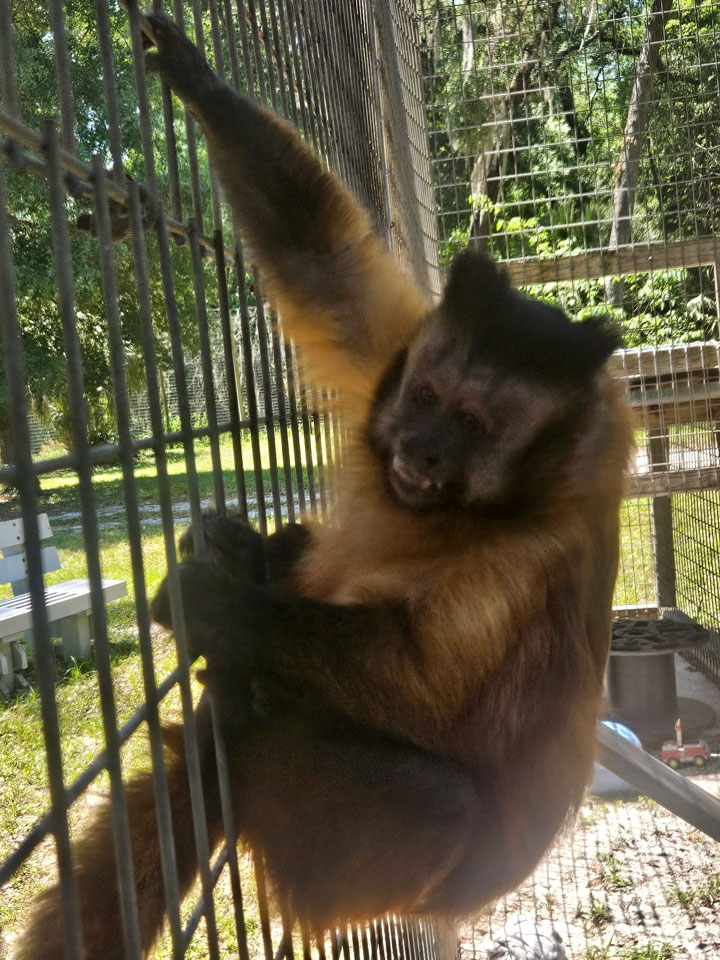
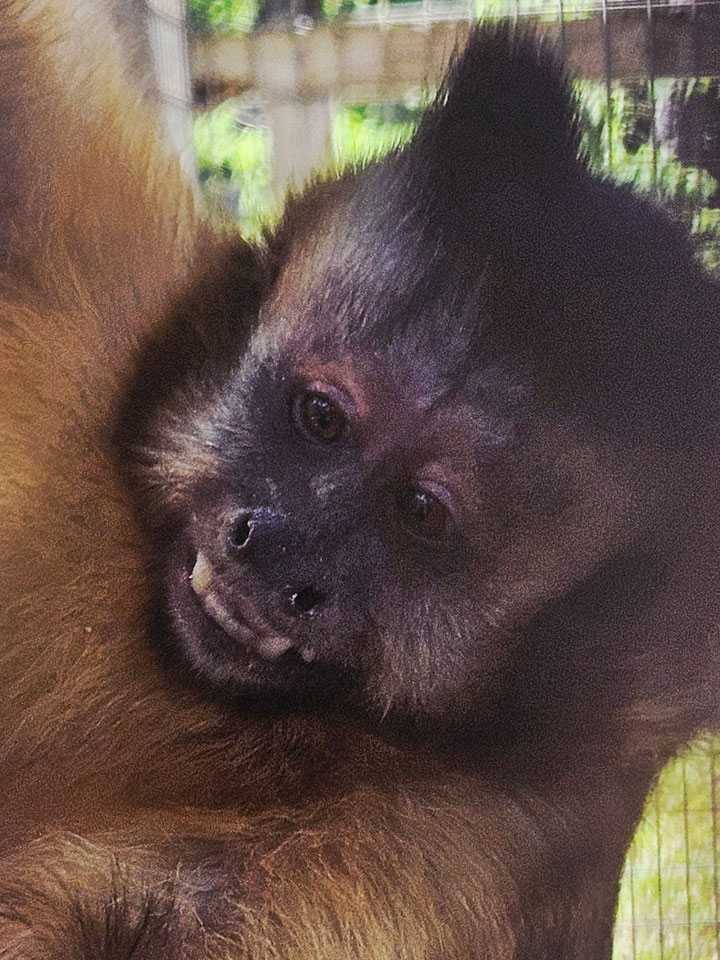
At EARS Sanctuary, Suzie enjoys:
- A secure, enriched habitat designed to support climbing and exploration
- Plenty of vertical space and structures that allow her to move naturally
- Daily enrichment activities such as puzzles and toys that stimulate her intelligence
- A balanced diet of fruits, vegetables, and specialized nutrition
- Social stimulation and attentive care from trained staff and volunteers
Sanctuaries like EARS provide a safe and stable environment where primates like Suzie can receive lifelong care, enrichment, and opportunities to express their natural behaviors.
Suzie’s curious nature and playful energy make her a favorite among visitors, who enjoy watching her explore, interact, and demonstrate the intelligence that makes capuchin monkeys so remarkable.
About Black-Capped Capuchin Monkeys
Black-capped capuchin monkeys (Sapajus apella) are among the most intelligent monkeys in the world. They are known for their ability to use tools, solve problems, and remember solutions to challenges. In the wild, capuchins have been observed using sticks to reach food and rocks to crack open nuts.
Capuchins are omnivores, meaning they eat both plants and small animals. Their diet includes fruits, seeds, nuts, insects, eggs, and small vertebrates. They spend much of their day searching for food, grooming one another, and exploring their surroundings.
Because of their intelligence, capuchin monkeys require constant mental stimulation. In managed care settings, enrichment activities such as puzzle feeders, climbing structures, and interactive toys help keep them physically and mentally engaged.
Black-capped capuchins can live 20 to 40 years, making their care a long-term commitment that requires specialized knowledge and resources.
Why Capuchin Monkeys Need a Sanctuary
Capuchin monkeys are highly intelligent and social animals that require specialized care, enrichment, and companionship. Many capuchins are kept as pets when they are young and small, but as they grow, their strength and intelligence make them difficult for private owners to manage safely.
Because capuchins raised in captivity often lack survival skills, they cannot be safely released into the wild. Sanctuaries provide a safe place where rescued capuchins receive proper nutrition, enrichment, and lifelong care.
At EARS, Suzie lives in a secure environment where her physical, social, and mental needs are carefully supported every day.